The Milky Way is an incredible scientific wonder. It is also a delicious chocolate bar. Today though we want to focus on the giant galaxy full of billions of stars, not the marvelous wonder that fits in the palm of your hand. The Milky Way is something we often hear about it and we all know that we are in it but most of us know little else. Read on to learn a little more about this far from little, magnificent galaxy.
The milky way is clearly not little. It is massive. It contains over 200 billion stars which are just impossible to imagine in our tiny minds. Yet if you can imagine 200 grains of sand, try multiplying that by a billion and it will give you an idea. That didn’t work? That is because there really is little in our world that comes close to helping to illustrate the size of the milky way. The Sahara desert has 1.5 septillion grains of sand so it is a little more than 200 billion. However, in terms of galaxies, the Milky Way isn’t that large at all. It is considered a medium-sized galaxy.
There are some galaxies that are only a few billion stars and some that have 200 trillion stars. The Milky Way sits somewhere in the middle of all of that. This is nice as it makes us feel small but not tiny. The Milky Way isn’t even one galaxy. It is the accumulation of a number of galaxies because as it grows bigger it is adding more and more to it. It recently captured the Canis Major Dwarf Galaxy and is still taking over all of its star systems.
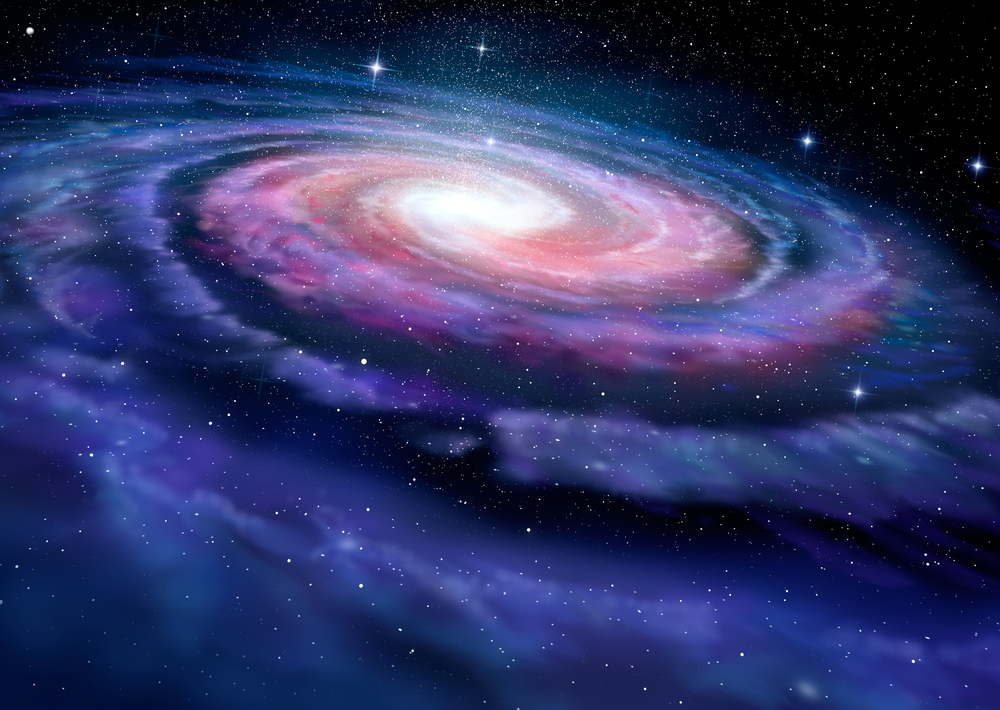
One fascinating thing about the Milky Way is that you have never seen it. You may be thinking back to a science book right now that should a spiral of stars but this is just an artist’s (or scientist’s) rendering of what they think it looks like. The truth is we can’t get far enough away to ever take a picture of it. So we have based our estimates on other galaxies and what we know about the Milky Way to make up a picture. We have decided it is spiral-shaped and has four long arms.
To many people, the Milky Way is the universe. I mean, it is certainly all we know about the place we live. Yet the Milky Way is only 13.6 billion years old, the universe itself is 13.7 billion years old. So in some ways, the Milky way is just a little behind the entire universe. Over that 13.7 billion years it has been changing constantly too.
The Milky Way gets its name thanks to the Greeks. Legend has it that the Goddess Hera sprayed milk across the sky and created the galaxy. Of course, this has become the way that western cultures refer to the galaxy but to other cultures who never heard these old stories, they have different names. The Chinese refer to the galaxy as the Silver River while in parts of Africa it is known as the Backbone of the Night.
Clearly, we still have a lot to learn about the Milky Way and the universe beyond it. Yet what we do know is already incredibly fascinating. To think it contains over 200 billion stars is just mind-boggling and to think that in the entire universe there are somewhere between 200 billion to 2 trillion galaxies is almost upsetting. It makes you realize that the idea that we are the only intelligent life in the universe is just laughable.