
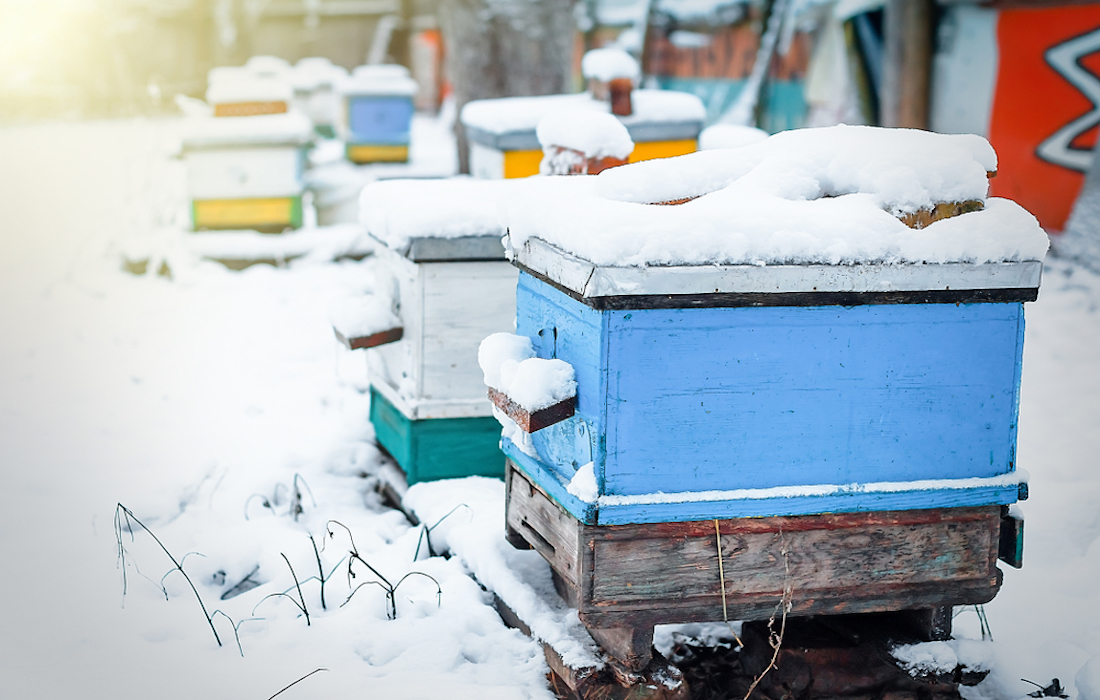
In most of the cases, only the queen survives in winters and emerges in spring to establish the new colony. Bees and wasps hibernate in cold months. Some of the bees like “Apis Mellifera” can not only survive but also remain active during winters.
Winter is the time when bees can reap their hard work and can live on the honey they have made and stored during summers.
Why bees make honey?
The survival of honey bee depends on the quality of food they have stored in their Honey Bee Colony. These colonies store the food in the form of honey, bee bread and a type of royal jelly. Honey bees make their honey from nectar, and bee bread is combined nectar and pollen which they store in the cells of colonies.

Royal jelly is the refined combination of honey and bee bread, this jelly is the food of nurse honey bees. To protect their selves from intense cold, honey bees consume the honey and bee bread. Till the spring, they need to manage with the stored honey, otherwise they die with hunger. In the majority of hives, worker bees throw out the drone bees from the hive to starve till death. This is a heart-melting reality. When there is no use of those bees, they throw them out from the hive to save more honey for the other bees.
What is honey bee huddle?
As the temperature goes down, honey bee workers huddle by pointing their heads inward. They form a cluster around the queen bee and her brood. By this, they protect their queen from the intense cold. Inside the cluster, bees can be fed on the stored honey and the outer most layer of worker bees insulate the sphere to protect sister bees.
As the temperature goes down, worker bees actively start working to generate the heat within the hive. To protect their bodies from cold they feed themselves honey and then shiver their bodies to raise the body temperatures. As there are thousands of bees constantly shivering, it raises the temperature up to 93F. During summers, the entire sphere of honey bees moves within the hive and they position themselves around the fresh honey.

What happens when we take the honey out?
According to research, an average bee colony can produce around 25 lbs at a time of the season. In agood forging season, ahealthy colony can produce as much as 60 lbs of honey which is actually very high as compared to their usage. So, season worker bee can make much more honey as compared to what’s required.
Majority of beekeepers harvest the surplus honey and they make sure that there is enough left for the bee colony. With this leftover honey, bees can survive during winters and get to work during the foraging season.