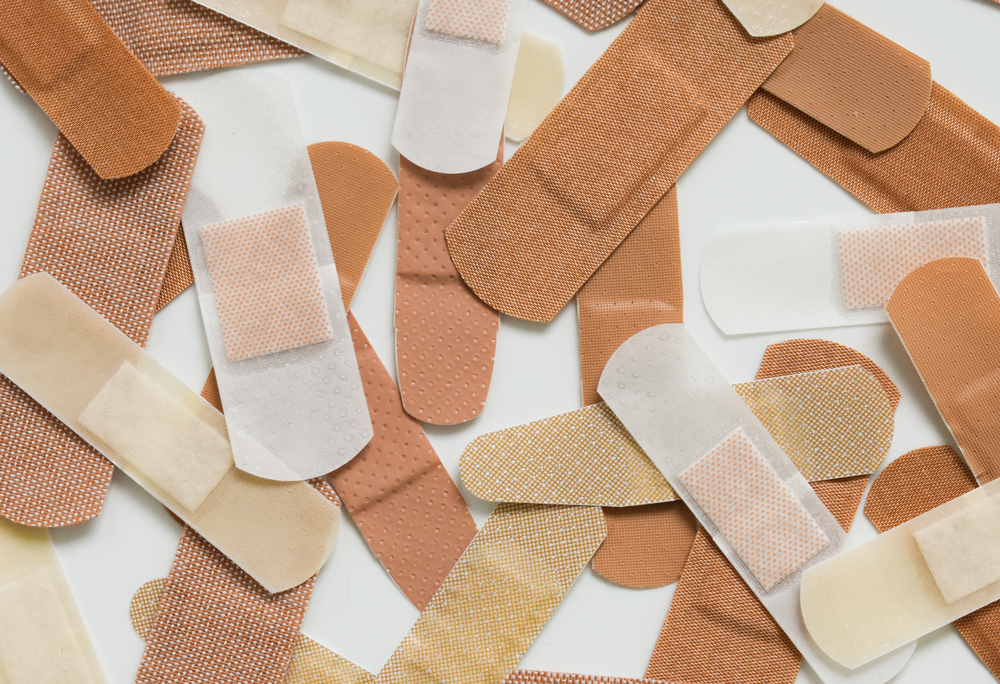
Bandages have been around for many years, and you probably don’t think much about them. People have made little updates to them over the years, such as adding the newest pop culture characters so that kids want to wear them. Well, another update involves smart bandages.
A smart bandage does everything a regular bandage does. It protects the wound while it’s healing, but it goes one step further. The smart bandage is capable of analyzing the wound in real time, detecting infections.
This is possible because of the nanosensors embedded in the bandage. Nothing crazy happens with these nanosensors; they’re safely tucked within the fibers of the bandage while they analyze.
Infections aren’t always detected until it’s too late, especially if the wound is covered and you can’t see what’s going on. This noninvasive way of monitoring the wound is a step in the right direction.
You might be wondering how these nanosensors detect a potential infection, and that’s good. Curiosity is a good thing, and the way these sensors detect a problem is by detecting concentrations of hydrogen peroxide, which shows up in high concentrations when an infection is brewing.
At first, scientists were having a hard time using nanosensors because they didn’t know how to keep the sensors in place and keep them highly sensitive. Microfibers helped solve this problem. The smart bandage will connect to a smartphone or a wearable so that the user can monitor what’s going on within the wound.
While a smart bandage is helpful to anyone with a wound, it is of incredible use to a person with diabetes. Infections are common when you have diabetes, and detecting an infection could prevent the patient from dealing with complications. Detecting an infection early means fewer antibiotics, and for folks with diabetes, it could mean preventing limb amputation.
Roxbury’s NanoBio Engineering Laboratory designed this new bandage. This laboratory is inside the Fascitelli Center for Advanced Engineering, and that’s where all the magic happened.
The folks in this laboratory had to figure out how to optimize the fabrication of a fiber that could hold nanotechnology without disturbing its sensitivity.
The team had to use specialized microscopes to create the materials for the bandages. It’s clear that creating this kind of bandage took a lot of effort, and it’s also quite costly, at least initially. Hopefully, this kind of technology will become easier to make so that it’s accessible to more people in the future.
It’s important to point out that the smart bandage isn’t available yet. This is still in its early stages of development. The bandage is promising, and it seems like it’s going to become available soon, but there’s still a long road ahead.
The bandage has to go through a verification process. The team is going to have to verify the bandage’s function in a petri dish. There, they will introduce cells that you normally find in wounds to make sure the nanotechnology can detect infections brewing.
The verification process seems more of a formality because the team is pretty sure they’ll be able to move on to the ‘in vivo’ process. This is when the smart bandage is used on live animals. In this case, it’s going to be used on laboratory mice to see if the bandage can detect infections on their wounds.
It seems like something straight out of a science fiction movie or show, but nanotechnology is here, and it’s offering solutions to health no one could have ever imagined. Science is still at the beginning. There’s no telling what more can be done with nanotechnology, but it’s exciting to see.