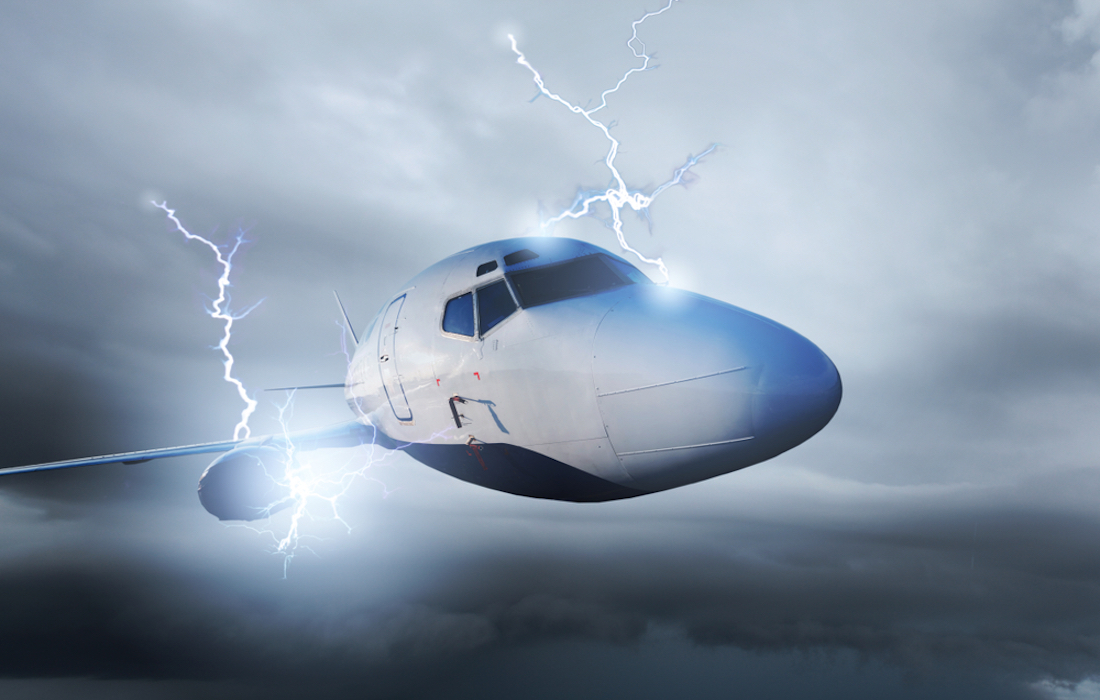
The United States Navy “doomsday” aircraft which was designed to survive a nuclear attack, was recently taken down by a bird. The bird strike damaged one of the plane’s four engines, and the U.S. Navy declared it an “A- Class mishap.” This meant that the bird strike event caused more than $2 million in damages, death or permanent disability.
On 2nd October, when an aircraft lands and then takes off again without coming to a full stop — the E-6B Mercury aircraft struck an as-yet-unidentified bird, Tim Boulay, a spokesman for the Naval Air Warfare Center Aircraft Division, told Military.com. The bird strike event took place at the Maryland Naval Air Station Patuxent River.
No injuries were reported, and the plane landed safely on the runway at the air station at 3:12 p.m. ET, Military.com reported.
And now, the plane is back in action. “The engine has been replaced, and the aircraft has been returned to service,” Boulay said, according to Military.com.

The bird strike event marked the second A-Class mishap of this type of doomsday aircraft. In February, an E-6B Mercury snagged a hangar while being moved one place to another at the Tinker Air Force Base in Oklahoma.
A Boeing 707, E-6B Mercury, that’s a souped-up military-style to serve as an airborne command and communications platform for the U.S. Navy in the event of a nuclear war. Its systems are designed to survive the nuclear bombs detonating below it, according to a report by The Center for the National Interest, a public policy think tank based in Washington, D.C.
The aircraft uses a low-frequency system for communication that would allow those in charge to communicate with the United States Navy‘s nuclear missile force on ballistic missile submarines at sea.
This doomsday airplane was also equipped with the airborne launch control system, meaning it can launch land-based intercontinental ballistic missiles.
Bird strikes are not uncommon. According to the government program Department of Defense Partners in Flight (DoD PIF), every year, about 3,000 wildlife-strike incidents are reported for military aircraft and another 2,300-plus for the civil crafts.
Multiple prevention programs, including the Bird or Wildlife Aircraft Strike Hazard program, have been put into place in an effort to reduce these incidents of bird-strike.