
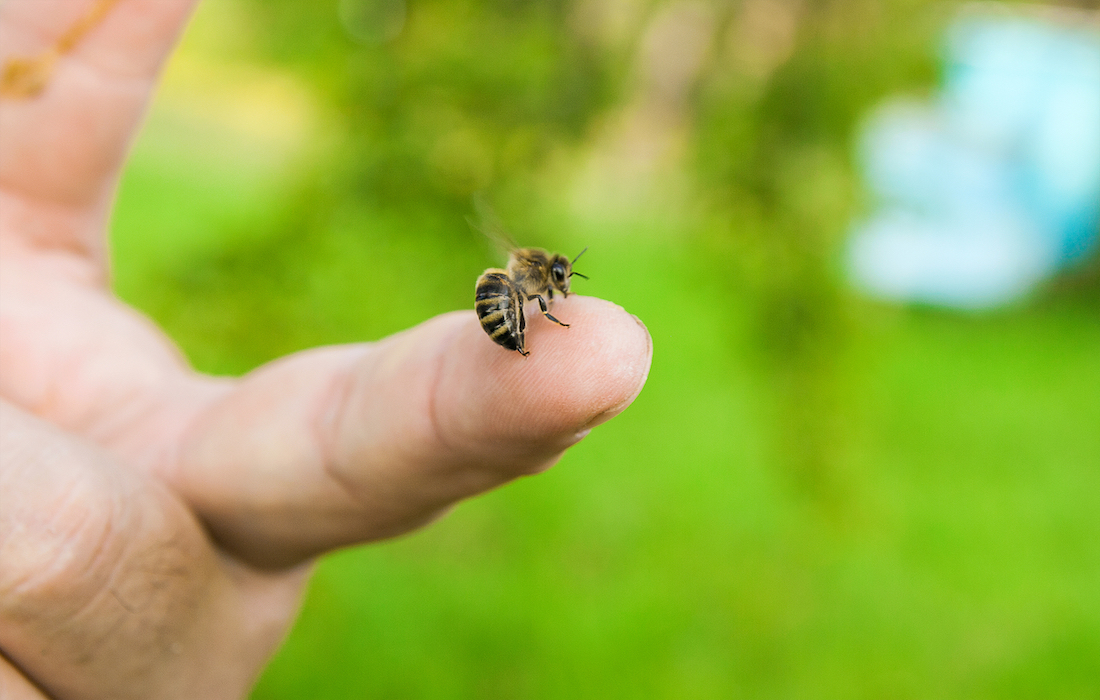
According to some traditional beliefs, a bee can only sting you once and after that it dies. But do you think it is true? Here is the whole science behind bee stings that you need to know. We have also discussed what to do if a bee stings you and how to avoid bee stings.
Some bees can sting again
Bee stings are pretty common but they can also be deadly. Fatalities occur every year to 0.03-0.48 people per 1 million, making the probability of dying from a sting by wasps, bees, or hornets about the same as being struck by lightning. Bee stings typically result in limited inflammation and pain around the site.
In case you have ever been stung by a bee, you may have felt happy thinking that the bee was on a suicide mission when it decided to sting you. But do bees really die after stinging a person? The answer to this question depends on the bee.
Honey bees die after they sting, but other bees like wasps and hornets can sting you and live to sting another day and another victim too.

Why does a bee sting you?
The bee’s stinger is an element called the ovipositor. The Bee stings to lay eggs in an unwilling invertebrate host. The Bee stings a host with venom secretions that are intended to temporarily or permanently paralyze the host. Only the queen Bee lays eggs among honeybees and bumble bees; other female bees use their stinger element, ovipositors, as defensive weapons against other insects and people.
How stings work?
A sting occurs when a female wasp or bee lands on your body skin and uses her stinger element against you. As the bee stings you, it pumps venom into your body from attached venom sacs through the needle-like portion of the sting apparatus which is known as the stylus.
This sting apparatus is situated between two lancets with barbs. When a wasp or bee stings you, the lancets become embedded in your body skin. As they alternately push and pull the stylus in your body, the venom sacs release venom into your body.
Why honey bees die after they sting you
The stinger has fairly large, backward-facing barbs on the lancets in honeybees. When the bee stings you, these barbs stuck into your body, and thus it becomes impossible for the honey bee to pull its stinger back.
As the honeybee attempts to fly off, the entire stinging apparatus gets pulled from the honeybee’s abdomen and stays in your body skin. After this, the honey bee dies because of this abdominal rupture. As honeybees live in large social colonies, the group of honeybees can literally afford to sacrifice a few members to defend their hive.
What to do if you are stung?
If a honeybee stings you, remove the stinger as quickly as possible because you may face some serious problems if it remains inside you for a long time. The venom sacs will still continue to pump venom into you even when they are detached from honeybee’s body. You might face more pain!
According to traditional sources, if a bee stings you, you should look for something flat and stiff, like a credit card to scrape the stinger off rather than pinching the stinger to remove it.